Handing your stuff over to a building you’ve never set foot in before is a weirdly big leap of faith. Will it actually be safe in there? Good question – and it’s one worth asking before you sign anything.
Here’s the thing: “secure storage” gets thrown around so often it’s basically lost its meaning. Every provider says it. Not every provider means it. So before you commit your grandmother’s china, your business stock, or your entire garage to a stranger’s building, it’s worth knowing what real security actually looks like – layer by layer, not just buzzword by buzzword.
Once you know what to look for, you can find your nearest Safeguard location and check it off yourself.
What Does ‘Secure’ Actually Mean?
Here’s the first thing to get straight: security isn’t one big lock. It’s a few smaller ones, stacked on top of each other.
Think of it like this – a single deadbolt on your front door is fine, until someone figures out how to pick it. But a locked gate, a doorbell camera, a motion-sensor light and a nosy neighbour? That’s layers. Each one covers a gap the others might miss.
Storage security works the same way. You’ve got access control (who can even get in), monitoring (who’s watching while they’re in there) and alarm response (what happens if someone tries something they shouldn’t). Get all three working together, and you’ve got something worth trusting your gear to. Miss one, and you’ve got a gap.
So that’s what we’re walking through – one layer at a time.
Pin Codes and Gated Access: The First Line of Defence
Here’s a fun fact: a shared key does nothing to stop the wrong person getting in. If everyone’s got the same key, or the gate’s just… open, you’ve got no real idea who’s coming and going.
Pin code access flips that. Every person gets their own unique code, and every single entry gets logged – who, and when. No one’s wandering in because they found a gap in the fence or borrowed someone’s spare key. If your code doesn’t work, you’re not getting through. Simple as that.
It sounds like a small thing. It isn’t. It’s the difference between “we think it’s secure” and “we know exactly who’s on site, and when.”
Cameras That Are Actually Watching
Having a camera bolted to a wall doesn’t mean much on its own. Plenty of buildings have a camera or two stuck up as an afterthought – more for show than for actually seeing anything useful.
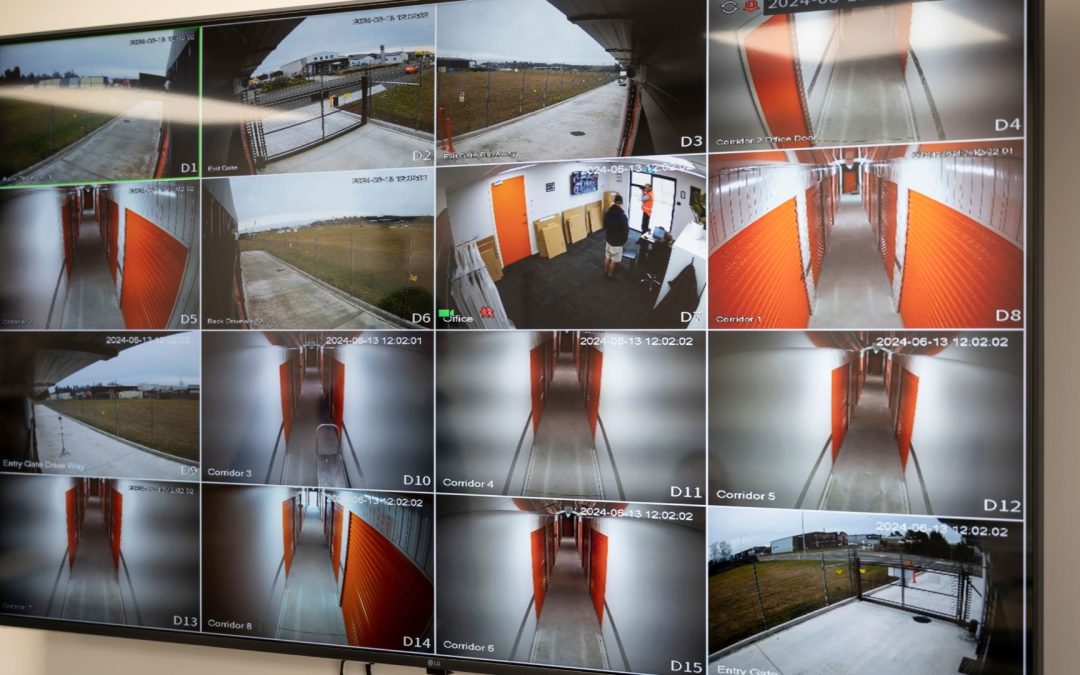
What matters is coverage. Cameras placed where the action actually happens: gates, driveways, rows of units – running around the clock, not just during business hours. It’s the difference between a facility that could review footage if something happened and one that’s genuinely watching.
Here’s a good question to ask any provider, not just us: how many cameras have you got, and where? If they can’t answer that clearly, that tells you something too.
Alarms: The Layer Most People Forget to Ask About
Most people think “alarm” and picture one big siren on the front gate. And sure, that’s something – but it only tells you someone’s breached the perimeter. It says nothing about which unit, or whose stuff is actually at risk.
Individually alarmed units are the gold standard here. If someone tampers with your specific unit, that’s flagged immediately – not just when they’ve already made it past the front gate. It’s a much tighter net. Your gear is covered even overnight, even when nobody’s on site to see it happen.
Now, don’t think that break-ins are common – they’re genuinely rare at well-run facilities. It’s about knowing the difference between a provider that’s covering the basics and one that’s actually thought this through.
Want to see the security setup in person before you commit? Book a walkthrough at your nearest branch – we’re happy to show you around.
Fencing, Gates and Keeping the Wrong People Out
Everything we’ve covered so far is about reacting well if someone tries something. Fencing and gated compounds are about stopping that situation from happening in the first place.
An electric fence or a properly gated perimeter means opportunistic access – someone wandering in because a gate was left open, or a fence had a gap – just isn’t on the table. It’s the difference between preventing a problem and cleaning up after one.
Prevention wins, every time.
A Quick Checklist Before You Sign Up Anywhere
Here’s the bit worth screenshotting. Whoever you end up storing with — us or anyone else — ask these six questions before you sign anything:
- Is access pin-coded, and is every entry logged?
- Are the cameras actually monitored 24/7, not just recording into the void?
- Are units individually alarmed, or is it just one alarm for the whole site?
- Is the perimeter properly fenced or gated?
- Can you get a walkthrough before you commit, so you can see it with your own eyes?
- Does the facility offer a range of unit sizes so you’re not paying for space you don’t need?
If a provider ticks all six, you’re in good hands. If they get vague or defensive about any of them, that’s worth noting too.
Why Kiwis Trust Safeguard Storage With Their Gear
We built this article to be genuinely useful whether you end up storing with us or not – because that’s the only way a checklist like this means anything. But since you’ve made it this far, here’s where we come in.
Our facilities are generally built around these exact same layers – pin code access, CCTV, individually alarmed units and fencing at many of our locations around the country. Setups might vary a bit branch to branch, so rather than reeling off specs that might not apply to the site nearest you, we’d rather you check the security features at your local branch directly. Ask us anything – we’d genuinely rather you feel sure than just take our word for it.
We’re proud to be Kiwi-owned and built around this stuff, not because it sounds good on a website, but because it’s what we’d want for our own gear too.
The Bottom Line
Security shouldn’t be something you have to take on faith. Now you know what “secure” actually means – not a buzzword, but a handful of layers doing their job together.
Come and see it for yourself: find your nearest Safeguard Storage location and ask us anything you like. You’ll know exactly what you’re looking at, and exactly what to ask anyone else, too.